
 English
 Portugues
 Türk dili
 Tiếng Việt
Электроизоляционный нетканый материал
Electrical Insulation Nonwoven Fabric Material Electrical insulation nonwoven fabric is a specialized material designed to provide high dielectric strength, thermal resistance, and mechanical durability in electrical applications. It serves as a barrier to prevent electrical current leakage, short circuits, and other hazards in high-voltage environments. This material is widely used in transformers, motors, generators, cables, and other electrical components where reliable insulation is critical. Key Properties 1. High Dielectric Strength – The material offers excellent electrical insulation, withstanding high voltages without breakdown. Its non-conductive nature ensures safe operation in demanding electrical systems. 2. Thermal Stability – Nonwoven insulation fabrics can endure extreme temperatures, making them suitable for applications involving heat generation, such as in motors and transformers. Some variants are flame-retardant, enhancing safety. 3. Mechanical Strength – Despite being lightweight, the fabric exhibits strong tensile strength and resistance to tearing, ensuring long-term durability under mechanical stress. 4. Chemical Resistance – Many nonwoven insulation materials resist oils, solvents, and corrosive substances, making them ideal for harsh industrial environments. 5. Flexibility & Adaptability – The fabric can be easily cut, shaped, or laminated to fit various components, providing design flexibility for engineers. Manufacturing Process Nonwoven insulation fabrics are typically produced through processes such as: - Needle Punching – Fibers are mechanically entangled to form a dense, durable structure. - Thermal Bonding – Heat is applied to melt and fuse synthetic fibers, creating a stable matrix. - Wet-Laid Process – Fibers are dispersed in liquid and then pressed into a sheet, resulting in uniform thickness. Applications - Transformers & Inductors – Used as interlayer insulation to prevent winding failures. - Electric Motors & Generators – Provides slot liners, phase separators, and ground insulation. - Cables & Wiring – Acts as a protective wrap to prevent electrical leakage. - Electronic Devices – Shields sensitive components from electrical interference. Advantages Over Traditional Materials Compared to woven fabrics or paper-based insulation, nonwoven materials offer superior uniformity, better conformability, and enhanced resistance to moisture and contaminants. Their engineered structure ensures consistent performance across different operating conditions. Conclusion Electrical insulation nonwoven fabric is a critical material in modern electrical engineering, combining high performance with reliability. Its unique properties make it indispensable in ensuring the safety and efficiency of electrical systems. As technology advances, further innovations in fiber composition and manufacturing techniques will continue to enhance its capabilities.
продукт
классификация:
-
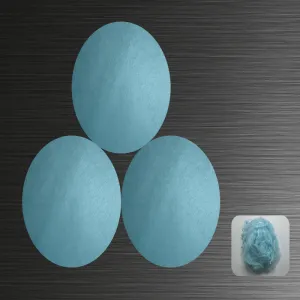
Электрический нетканый материал
Их классификация: Изоляционный нетканый материалмнения: 18номер:Время выпуска: 2025-12-03 09:55:15Нетканый материал для электротехники — это высокоэффективный материал, разработанный для изоляции и защиты в электрических и электронных устройствах. В отличие от тканых или трикотажных материалов, нетканые материалы создаются путем прямого склеивания волокон, в результате чего образуется однородная структура, обеспечивающая превосходную механическую прочность, термическую стабильность и диэлектрические свойства. Электротехнические нетканые материалы широко используются в трансформаторах, двигателях, генераторах, блоках питания и другом высоковольтном оборудовании, где надежная изоляция имеет решающее значение.
новости
классификация:
-
[industry news]Choosing the Right Polyester Fiber Nonwoven Fabric for Elect...
2025-12-27 08:37:52
случай
классификация:
Нет результатов поиска!
видео
классификация:
Нет результатов поиска!
скачать
классификация:
Нет результатов поиска!
вербовка
классификация:
Нет результатов поиска!
Рекомендуемые продукты
-
NEWS
Электрический нетканый материал
Узнать больше



 телефон